
If your garage door keeps reversing when you try to close it, the system may be detecting an obstruction, resistance or another problem that is preventing a normal closing cycle. Common causes include blocked or misaligned safety sensors, problems with the door’s movement, incorrect travel settings or faults within the automation system.
The most useful clue is often when the door reverses. A door that immediately reopens can have a very different problem from one that reaches the floor before reversing.
What Is Your Reversing Garage Door Trying To Tell You?
Automated garage doors have safety features designed to prevent the door from simply continuing to close when something is wrong. Depending on the system fitted, excessive resistance or a triggered safety device can cause the movement to stop or reverse.
That means reversing isn’t necessarily the fault itself. It can be the system’s response to another problem.
Pay attention to the pattern:
- Reverses immediately: Check for an obstruction and visible safety sensor issues.
- Reverses at the same point: Something may be creating resistance during the door’s travel.
- Reaches the floor and reopens: The operator may not be recognising the correct closed position.
- Only reverses occasionally: Look for changing conditions such as debris, unusual noises or intermittent resistance.
These details can make diagnosing the underlying problem much easier.
Common Reasons A Garage Door Keeps Reversing
Safety Sensors Are Blocked Or Misaligned
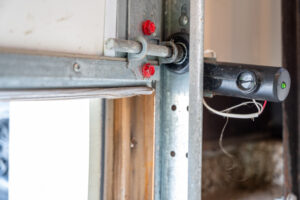
Some automated garage doors use photoelectric safety sensors near the opening. Dirt, an obstruction or misalignment can prevent the system from completing its closing cycle.
If your door has visible sensors, check that nothing is blocking them and that they are clean. Never bypass a safety device simply to make the door close.
Something Is Restricting The Door’s Movement
The motor still relies on the physical garage door moving correctly.
Problems involving tracks, rollers, hinges or other moving components can create additional resistance. You may notice the door slowing down, juddering, making unusual noises or reversing at approximately the same position each time.
If these symptoms appear together, the complete door should be inspected rather than assuming the motor is responsible.
Our garage door servicing can help identify mechanical and operational problems affecting the door.
The Travel Settings Are Incorrect
An automated garage door needs to recognise where its fully open and fully closed positions are.
If the travel or limit settings are incorrect, the door may reach the floor but attempt to continue travelling. The resulting resistance can cause some systems to reverse.
Adjustment methods differ between operators, so avoid changing settings at random. Use the instructions for the specific system fitted or ask an engineer to investigate.
The Door Is Not Properly Balanced
Springs and counterbalance components help manage the weight of a garage door. If part of this system becomes worn, damaged or incorrectly adjusted, the door can become harder to move.
This is not a suitable DIY repair. Springs, cables and other components under tension can be dangerous to work on without the appropriate knowledge and equipment.
There Is A Problem With The Automation
The operator, controls or associated safety equipment can also develop faults.
Importantly, a reversing garage door doesn’t automatically mean the motor needs replacing. A working operator may simply be reacting to resistance elsewhere in the door.
Good fault diagnosis should therefore consider both the physical door and its automation before deciding what needs repairing.
For more information about powered systems, see our guide to electric garage doors.
What Can You Check Before Calling An Engineer?
There are several useful checks you can make without dismantling the garage door:
- Remove obvious objects or debris from the doorway
- Check visible safety sensors for dirt or obstruction
- Watch where the door reverses during its closing cycle
- Listen for new scraping, grinding or straining noises
- Look for uneven or jerky movement
- Note whether the fault happens every time or intermittently
These observations can provide useful clues when explaining the problem to an engineer.
Avoid attempting repairs involving springs, cables or counterbalance mechanisms. You should also avoid repeatedly operating a door that is visibly damaged, moving unevenly or making severe mechanical noises.
If you’ve noticed other changes in how the door operates, our guide to the signs your garage door needs repair covers other warning signs worth watching for.
Frequently Asked Questions About Reversing Garage Doors
Why Does My Garage Door Go Down And Then Straight Back Up?
The system may be detecting an obstruction or resistance, a safety device may have been triggered, or the operator may not be recognising the correct closing position. Where the door reverses can provide an important clue.
Why Does My Garage Door Reverse When Nothing Is In The Way?
An obstruction is only one possible cause. Sensor issues, mechanical resistance, incorrect travel settings or an automation fault can also cause a garage door to reverse.
Can I Fix A Reversing Garage Door Myself?
Simple checks such as removing debris or cleaning an accessible safety sensor may solve straightforward problems. Repairs involving springs, cables, electrical components or the counterbalance system should be left to a suitably experienced professional.
Should I Keep Using A Garage Door That Keeps Reversing?
If the problem persists after basic checks, avoid repeatedly cycling the door in an attempt to force it closed. This is particularly important if the door is uneven, unusually noisy or visibly damaged.
Still Reversing? Get The Cause Checked, Not Guessed
A garage door that repeatedly reverses is telling you that something isn’t working as expected. Sometimes the cause is straightforward, but persistent reversing can indicate a mechanical, safety or automation issue that needs proper diagnosis.
Rather than replacing parts based on guesswork, an inspection can establish why the door is reversing and what actually needs attention.
If your garage door continues to reverse after the basic checks above, contact Divine Door & Gate Automation to discuss the problem and arrange the appropriate next step.